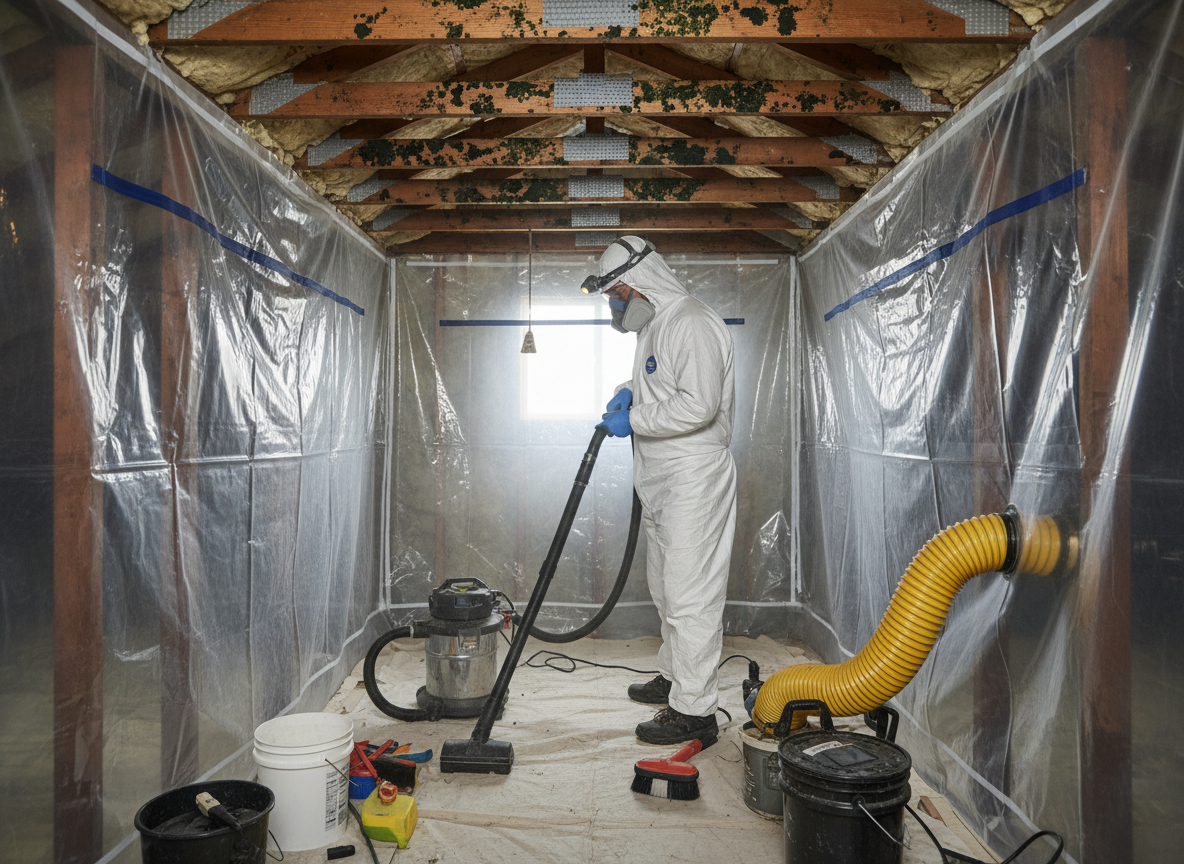
Porter Ranch homes near Sesnon Trail and in West Porter Ranch often see mold after winter rains penetrate stucco or older rooflines common in Los Angeles County construction from the 1980s onward. Hot dry summers can mask ongoing issues until humidity spikes inside walls or attics, allowing hidden growth on drywall or insulation. Professional mold removal starts with isolating the affected zone to prevent spores from spreading into living spaces during removal.
Technicians use negative air machines and HEPA filtration when cutting out contaminated sections around plumbing leaks or window condensation points typical in Porter Ranch Town Center properties. Edge cases include mold behind built-in cabinetry or in crawl spaces where soil moisture from nearby hillsides migrates upward. Removing only visible patches without addressing the source leads to rapid return, especially when irrigation overspray hits foundations during the dry season.
Los Angeles County building practices require proper disposal of moldy materials to avoid cross-contamination during transport. Homeowners sometimes attempt bleach cleaning on porous surfaces, which fails to reach roots and can worsen air quality. Full professional mold removal includes post-remediation verification to confirm levels have returned to normal before any rebuilding begins.
Seasonal Guidance
Winter rains followed by sudden dry heat create expansion and contraction cycles that open small cracks in Porter Ranch homes, allowing water intrusion that feeds mold behind siding or in attics near Sesnon Trail.
Technician insight
In Porter Ranch the thing that catches most people out with professional mold removal is irrigation overspray hitting stucco foundations along West Porter Ranch slopes. The dry summers hide the slow wicking until a winter storm pushes water higher, and homeowners keep painting over the same spot instead of rerouting sprinklers.
Attic Growth After Roof Leak
A Porter Ranch home near the Town Center developed black spots on ceiling drywall after heavy winter rain. Inspection found water tracking along rafters from a small flashing gap near Sesnon Trail. We contained the attic, removed the wet insulation and affected sheathing sections, dried the space, and advised on ventilation upgrades. Follow-up sampling showed normal levels and no recurrence after the next rains.
How it works
- 1
Initial Assessment
Inspect affected rooms, attics, and crawl spaces in Porter Ranch homes to map moisture sources and mold extent.
- 2
Containment Setup
Seal work zones with plastic barriers and negative air pressure to protect unaffected areas in West Porter Ranch properties.
- 3
Material Removal
Cut out and bag contaminated drywall, insulation, or wood while using HEPA vacuums throughout the process.
- 4
Source Correction and Drying
Fix leaks, improve ventilation, and apply antimicrobial treatments before final clearance testing.
- 5
Final Verification
Conduct air and surface sampling to confirm the space meets safe standards before homeowners return.
Pricing
Cost depends on square footage affected, access difficulty in attics or crawl spaces, and whether additional drying equipment is needed.