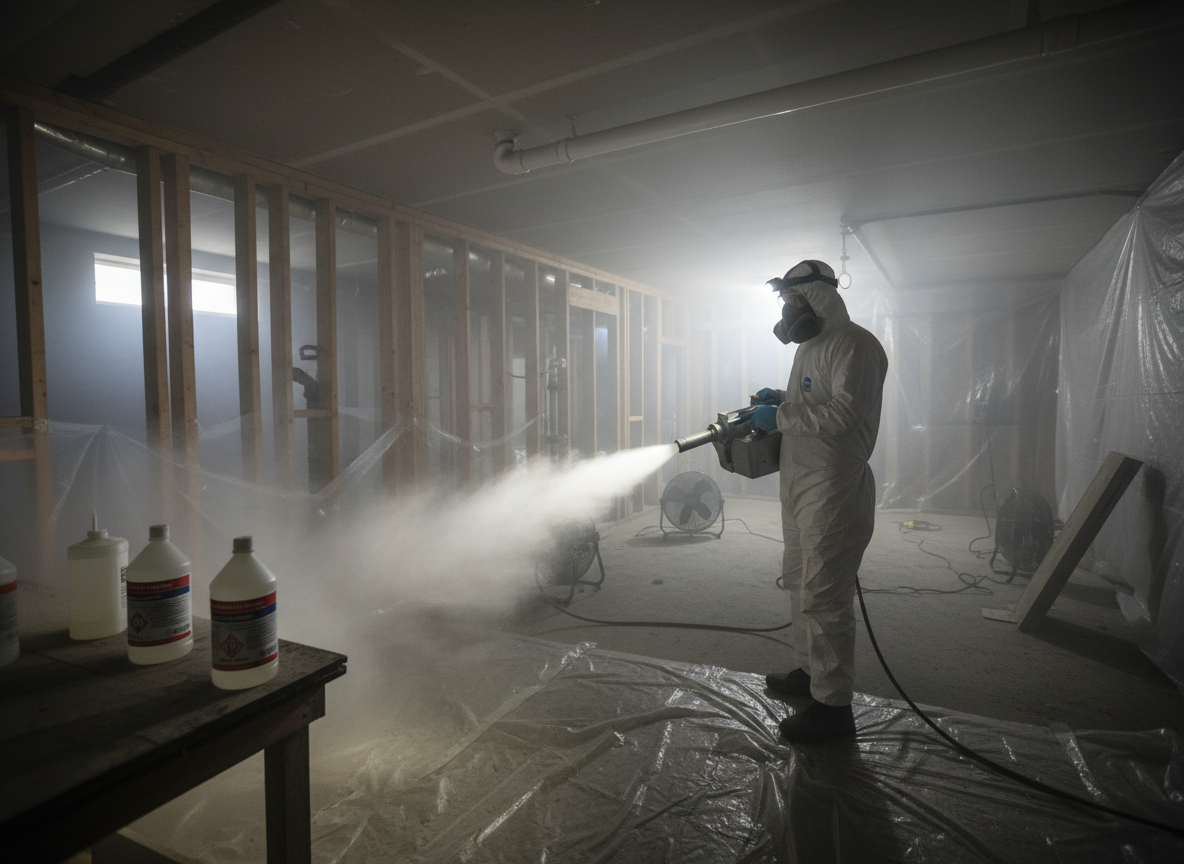
Mold fogging treatment disperses EPA-registered antimicrobial mist through HVAC ducts and living spaces to address colonies that standard wiping misses. In Porter Ranch homes near West Porter Ranch or the Town Center, newer construction with tight envelopes and central air often concentrates moisture from coil condensation during hot dry summers. Fog particles under 10 microns penetrate behind baseboards and into attic insulation where leaks from occasional winter storms have gone unnoticed. Technicians seal registers, run the system on fan-only, and monitor particle counts before and after to confirm reduction without leaving residue on electronics or fabrics.
Edge cases include stucco-clad homes along Sesnon Trail where hillside runoff saturates exterior walls, allowing mold to travel upward through weep holes into second-floor ceilings. Fogging here requires negative air machines tied into the attic to prevent cross-contamination into neighboring units common in Porter Ranch developments. Los Angeles County building codes require containment when disturbing more than ten square feet of affected material, so fogging is performed after physical removal of visible growth rather than as a standalone step. Homeowners must keep pets and sensitive individuals out for four hours post-treatment while the product dries and off-gasses.
The process accounts for Northridge and Chatsworth wind patterns that can push outdoor allergens indoors through open windows during treatment. Technicians test humidity levels first; if indoor RH exceeds 55 percent, dehumidifiers run simultaneously to keep fog droplets from condensing on cold surfaces. Follow-up air sampling occurs 48 hours later to verify spore counts have dropped below outdoor baselines typical for the San Fernando Valley.
Technician insight
In Porter Ranch the thing that catches most people out with mold fogging treatment is assuming the dry summer air means no moisture problems—actually the AC coils in these 1990s–2000s homes run constantly and drip into the plenum, so fog never reaches the source unless we pull the coil first.
West Porter Ranch Condo HVAC Growth
A homeowner noticed musty odor from vents after heavy January rain. Inspection found condensation on the evaporator coil and visible growth inside the return plenum. We contained the system, removed accessible material, then performed fogging treatment through all ducts. Follow-up sampling showed spore levels matched outdoor baselines from nearby Chatsworth.
How it works
- 1
Initial Assessment
Inspect HVAC, attics, and wall cavities in Porter Ranch homes using moisture meters and borescopes to locate hidden growth before fogging begins.
- 2
Containment Setup
Isolate treatment zones with plastic sheeting and negative air to protect adjacent rooms common in Town Center townhomes.
- 3
Fog Application
Run antimicrobial fog through registers and open spaces for the time required by product label, typically 30–60 minutes depending on square footage.
- 4
Ventilation and Verification
Air out the home, then conduct post-treatment sampling to confirm spore reduction before returning the space to normal use.
Pricing
Cost depends on square footage treated, number of HVAC zones, and whether physical removal precedes fogging.