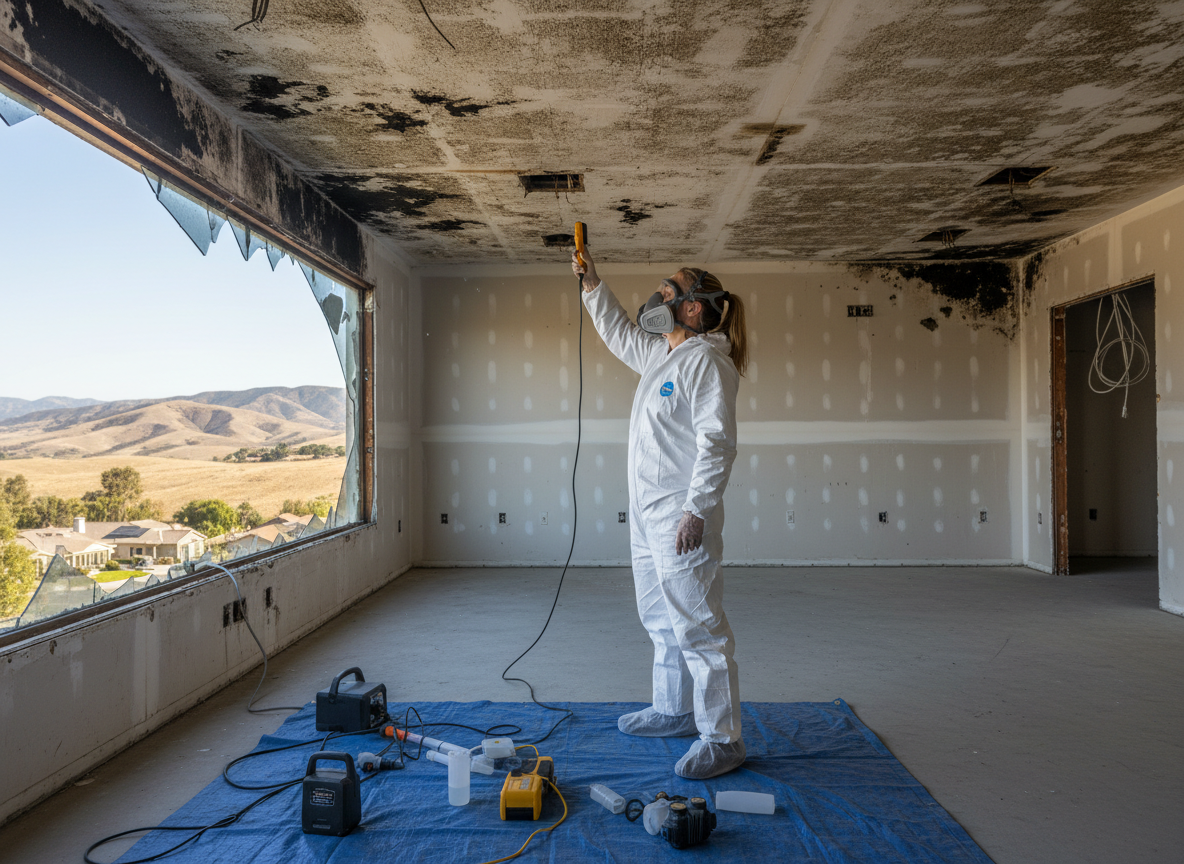
Commercial properties in Porter Ranch often feature larger HVAC systems and flat-roof designs that trap moisture during the hot dry summers typical of the Mediterranean climate here. Inspection teams focus on crawl spaces, mechanical rooms, and shared walls where condensation from cooling units meets the area's occasional winter rains. Buildings near Sesnon Trail and West Porter Ranch experience different airflow patterns than those closer to the Porter Ranch Town Center, affecting how mold develops in retail and office spaces.
Inspectors check for hidden growth behind drywall and in ceiling plenums, paying special attention to older commercial stock mixed with newer construction in Northridge and Chatsworth border zones. Moisture mapping and air sampling help identify issues before they spread through ventilation shared by multiple tenants. Los Angeles County regulations require documentation of findings for any commercial remediation plan, especially when water intrusion stems from irrigation or drainage around parking structures.
Edge cases include mold in elevator shafts or around loading docks where deliveries introduce humidity during summer months. Teams avoid disturbing occupied spaces during business hours and coordinate with property managers to minimize disruption. Access limitations in multi-story buildings near the Town Center often require specialized equipment to reach interstitial spaces without full demolition.
Technician insight
In Porter Ranch the thing that catches most people out with Commercial mold inspection is how the dry summer heat drives constant AC use, pushing condensation into ceiling plenums and shared walls of buildings near the Town Center that were built before current ventilation standards.
Retail Space at Porter Ranch Town Center
A ground-floor retail unit showed recurring musty smells near the back storage area after heavy winter rains. Inspection revealed moisture trapped behind a shared wall with an adjacent restaurant's HVAC condensate line. Sampling confirmed elevated mold levels in the plenum above the drop ceiling. Containment and targeted drying were completed over two days with no interruption to neighboring businesses.
How it works
- 1
Initial Site Walkthrough
Review building plans and walk all accessible commercial areas to note visible water stains, musty odors, and HVAC layout.
- 2
Moisture and Humidity Assessment
Use meters and thermal imaging on walls, ceilings, and mechanical rooms to locate hidden dampness common in Porter Ranch summers.
- 3
Air and Surface Sampling
Collect samples from multiple zones and send to a lab for species identification before recommending any commercial remediation.
- 4
Report and Recommendations
Deliver a written report with photos, lab results, and prioritized steps tailored to Los Angeles County commercial requirements.
Pricing
Pricing varies by building size, number of stories, and extent of access needed in mechanical spaces.