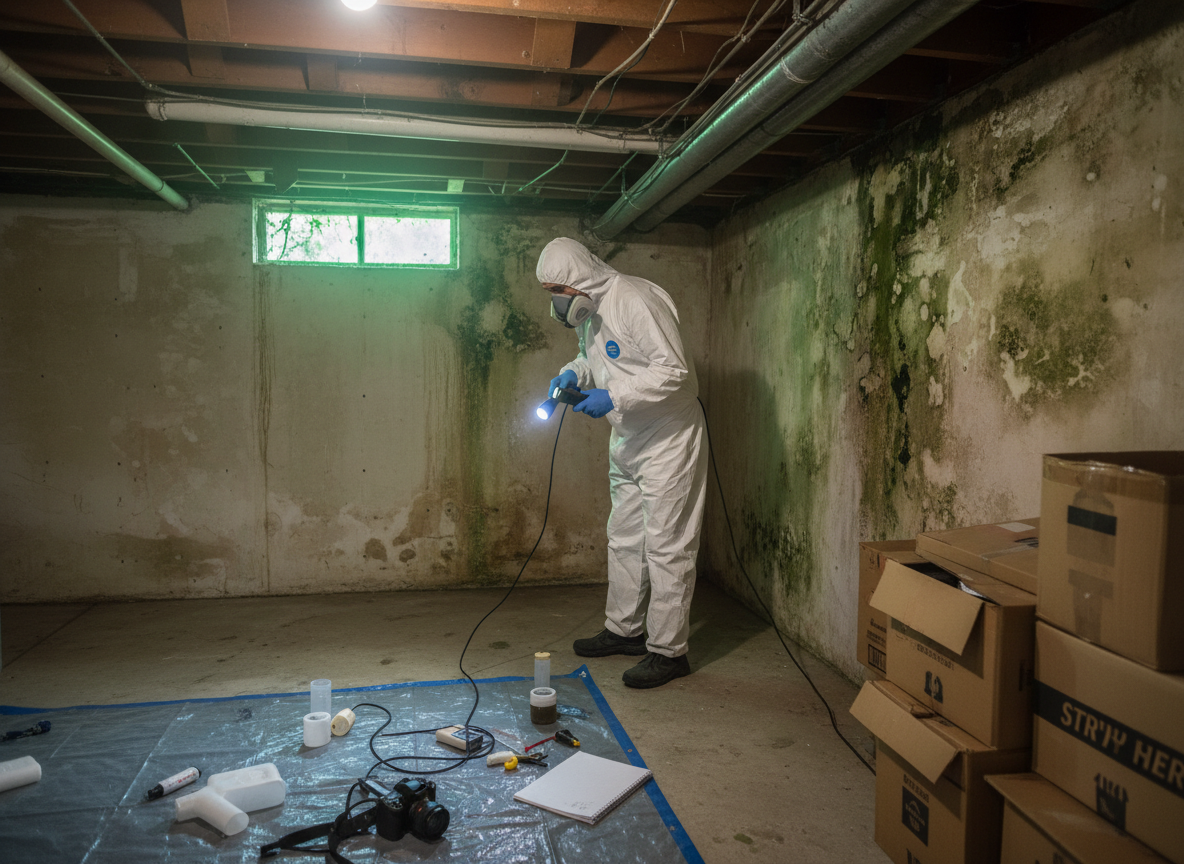
Porter Ranch homes in West Porter Ranch and near Porter Ranch Town Center often sit on sloped terrain that funnels winter rain toward lower levels. Even with the area's hot dry summers, moisture can linger in basements or crawl spaces built into the hills. A proper inspection checks for hidden growth behind drywall, under stairs, and along foundation walls where drainage from Sesnon Trail runoff meets older grading. Technicians use moisture meters and borescopes to reach areas that visual checks miss, especially in homes bordering Northridge and Chatsworth where soil movement shifts foundations over time.
Edge cases include HVAC ducts running through lower levels that spread spores when summer cooling kicks in. Los Angeles County building codes require proper ventilation in any below-grade space, yet many Porter Ranch properties from the 1980s and 1990s have sealed-over vents that trap humidity after rare but heavy rains. Inspectors note these code gaps and flag when a simple fan upgrade would change the risk profile. Homeowners in these neighborhoods frequently discover growth only after a musty smell reaches upper floors, making early detection critical before remediation expands.
Seasonal timing matters here. Dry summers lull residents into skipping checks, yet the first winter storm can push water against retaining walls near the trail. A basement mold inspection includes mapping every cold joint and pipe penetration to prevent future intrusion rather than just treating visible spots.
Technician insight
In Porter Ranch, the thing that catches most people out with Basement mold inspection is how the hot dry summers hide the fact that winter rain funnels down the slopes near Sesnon Trail and pools against foundations in West Porter Ranch homes, so growth stays hidden until the next cooling season starts the HVAC.
West Porter Ranch lower level inspection
A homeowner in West Porter Ranch noticed a faint odor after the first winter rains. Inspection found moisture trapped behind a finished wall where grading from the nearby trail directed water. We mapped the wet area, confirmed no active leak, and advised on ventilation changes that stopped further growth.
How it works
- 1
Site Walkthrough
Technician arrives during posted hours and examines all accessible lower-level areas for visible staining and musty odors.
- 2
Moisture Mapping
Readings are taken on walls, floors, and around windows to locate active water sources tied to local drainage patterns.
- 3
Sampling and Documentation
Air and surface samples are collected where needed, with photos and notes tied to specific rooms in the home.
- 4
Findings Review
Results are explained on site with clear next-step options and any required follow-up timing.
Pricing
Upfront quotes provided after the walkthrough during business hours.