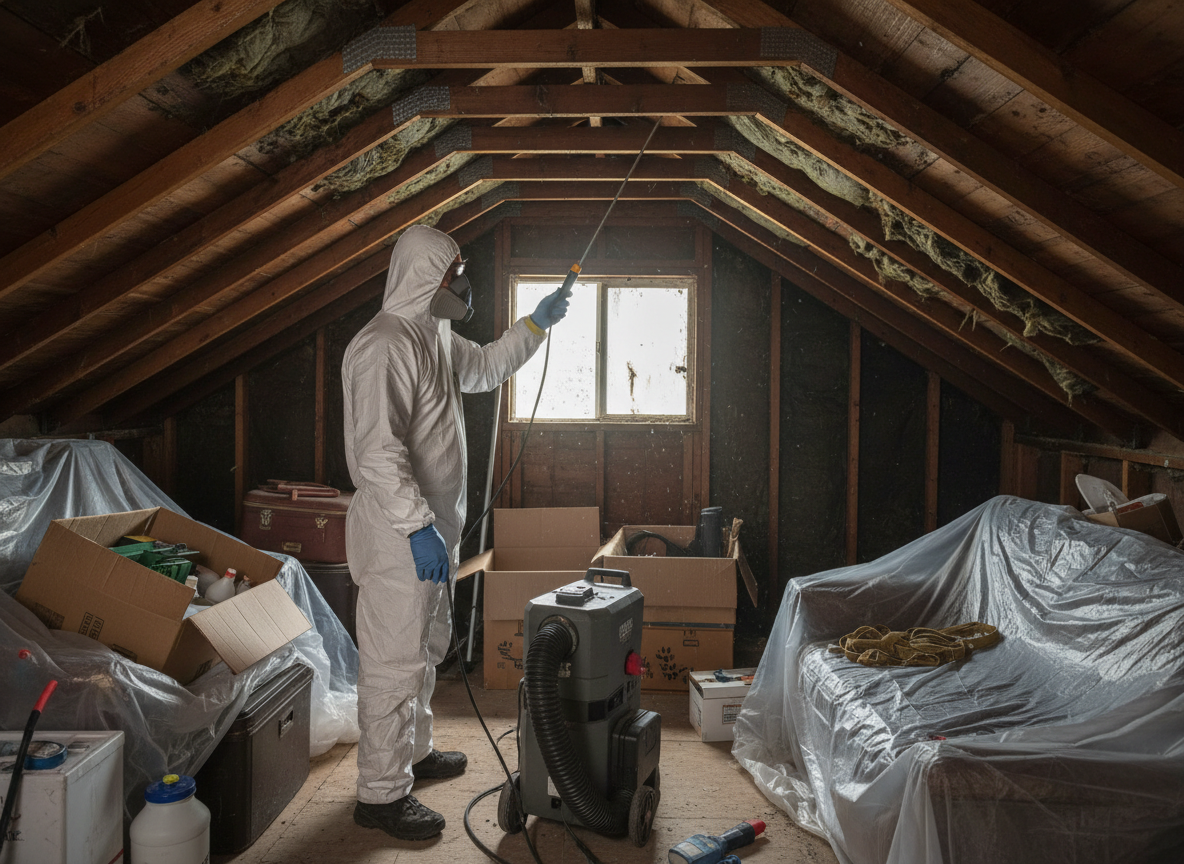
Attic mold often develops in Porter Ranch homes when roof penetrations or HVAC condensation allow moisture to collect in insulation during the hot dry summers. Mediterranean climate patterns mean rapid temperature swings that can hide active growth until homeowners notice musty odors or stained ceilings. Testing begins with air sampling and surface swabs to identify species and extent before any disturbance, especially important in two-story homes near the Porter Ranch Town Center where attics connect directly to living spaces.
Removal requires full containment with plastic sheeting and negative air machines to prevent spores from migrating into West Porter Ranch residences. Affected insulation is bagged and removed, followed by HEPA vacuuming and antimicrobial treatment of rafters and sheathing. In older tract homes bordering Northridge, we frequently find mold hidden behind recessed lighting or along valley flashing where poor drainage from winter rains concentrates water.
Post-remediation clearance testing confirms spore levels match outdoor baselines before insulation is replaced. Homeowners in Chatsworth-adjacent sections of Porter Ranch should avoid disturbing attic contents themselves, as disturbing dry mold during summer can aerosolize particles throughout the house. We coordinate with local roofing contractors when leaks require simultaneous repair to stop recurrence.
Technician insight
In Porter Ranch, the thing that catches most people out with Attic mold testing and removal is how the hot dry summers let small roof leaks go unnoticed until mold spreads through insulation in homes built along the slopes near Sesnon Trail, where drainage patterns push water toward valley flashing.
Hidden Mold After Summer Heat
A West Porter Ranch homeowner reported a persistent odor despite the dry weather. Inspection revealed condensation from an attic HVAC unit feeding mold along ceiling joists. We contained the space, removed contaminated insulation, treated the rafters, and confirmed clearance before reinstalling new material.
How it works
- 1
Initial Assessment
Visual inspection and moisture mapping of the attic space using thermal imaging and moisture meters.
- 2
Air and Surface Testing
Collection of samples to determine mold types and concentration levels before any remediation begins.
- 3
Containment and Removal
Setup of sealed barriers and HEPA filtration, followed by careful extraction of contaminated materials.
- 4
Treatment and Clearance
Application of EPA-registered antimicrobials and final testing to verify the space meets safe standards.
Pricing
Pricing based on attic size, mold extent, and required testing; upfront quotes provided after inspection.